Inquiry Based Learning Importance


Inquiry-based learning holds paramount importance in the context of international schools in Thailand, where cultural diversity is a defining feature. In a country that hosts a rich tapestry of expatriate communities, IBL becomes a catalyst for fostering cultural awareness and understanding. This approach not only accommodates diverse perspectives but also encourages students to explore and appreciate different cultural nuances, contributing to a harmonious and inclusive learning environment. Furthermore, as Thailand’s international schools cater to students with varying levels of English proficiency, IBL plays a pivotal role in language development. The active engagement required in inquiry-based learning, such as participating in discussions and collaborative projects, contributes significantly to enhancing communication skills in an English-speaking setting.

Critical thinking and problem-solving skills are highly valued in Thailand, and IBL aligns seamlessly with these educational priorities. By encouraging students to question, investigate, and analyze information, IBL nurtures analytical thinking—a crucial attribute in navigating the complexities of the 21st-century global landscape. The interdisciplinary nature of IBL also aligns with Thailand’s emphasis on cross-curricular integration. Students in international schools benefit from a holistic educational experience, making connections between subjects and developing a comprehensive understanding of concepts.

Preparing students for global citizenship is a key objective of international education in Thailand. IBL provides a platform for students to explore global issues, appreciate cultural diversities, and understand interconnected challenges. This not only cultivates a sense of global responsibility but also equips students with the skills and knowledge needed to contribute meaningfully to a globalized society. Adaptability and lifelong learning are essential skills for the future, and IBL fosters a love for learning and an ability to learn independently—qualities that are particularly pertinent in a rapidly evolving world.

The engagement and motivation fostered by IBL contribute to a positive and stimulating learning environment in international schools. Students are encouraged to pursue topics of personal interest, fostering a sense of ownership over their learning journey. Importantly, the principles of inquiry-based learning align seamlessly with the International Baccalaureate (IB) curriculum, which many international schools in Thailand follow. This alignment ensures that the pedagogical approach reflects the learner-centered philosophy of IB, emphasizing attributes such as inquisitiveness, open-mindedness, and reflective thinking.

The importance of inquiry-based learning in international schools in Thailand cannot be overstated. It serves as a dynamic and inclusive educational approach that not only addresses the diverse cultural context but also aligns with the educational priorities of the country, preparing students to thrive in a globalized and interconnected world.

American Prep International School Hat Yai firmly comply with IBL as one of the cores for high quality education.

Dr. Jay Zamecnik
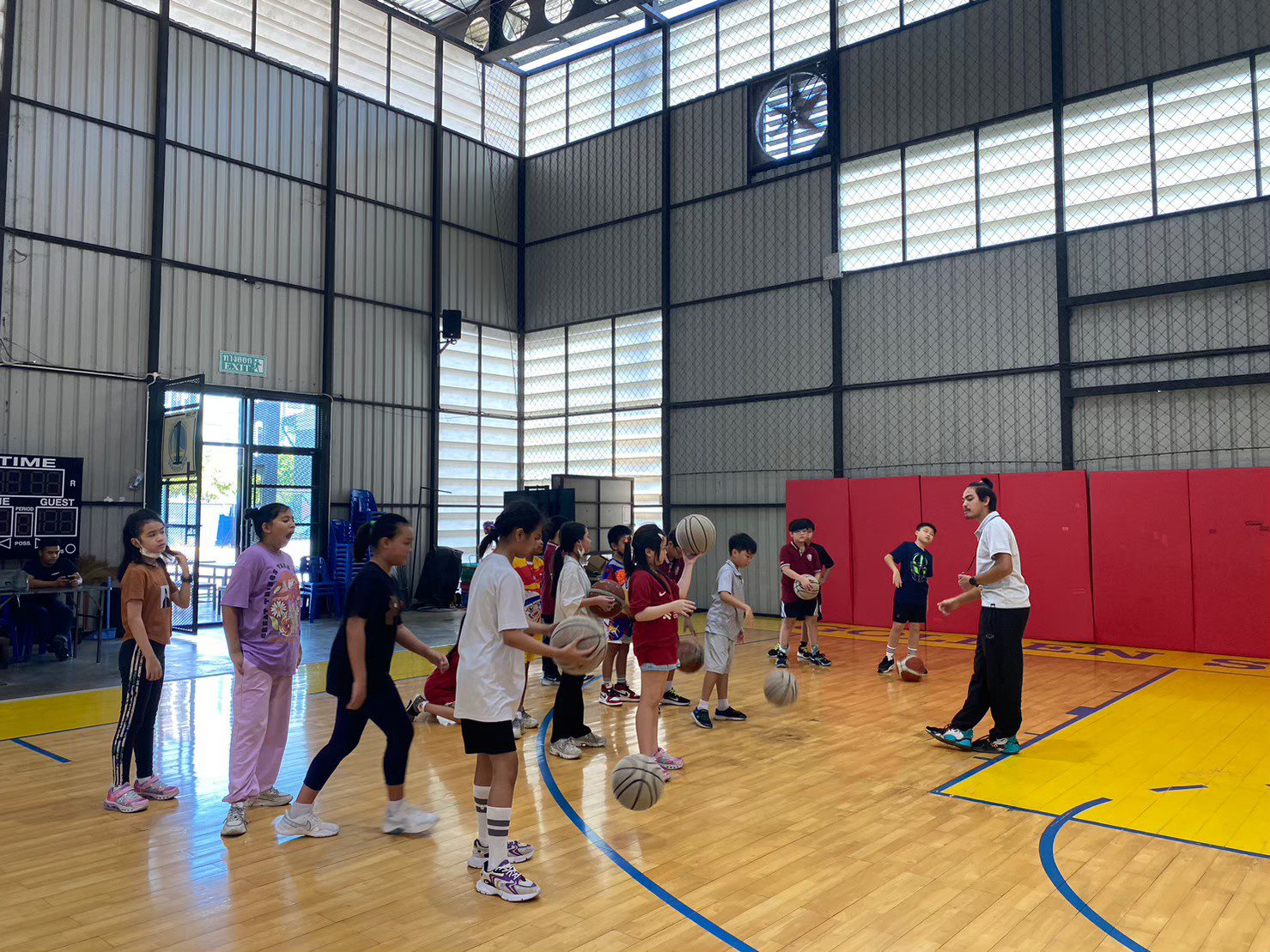
PE subject is IMPORTANT!

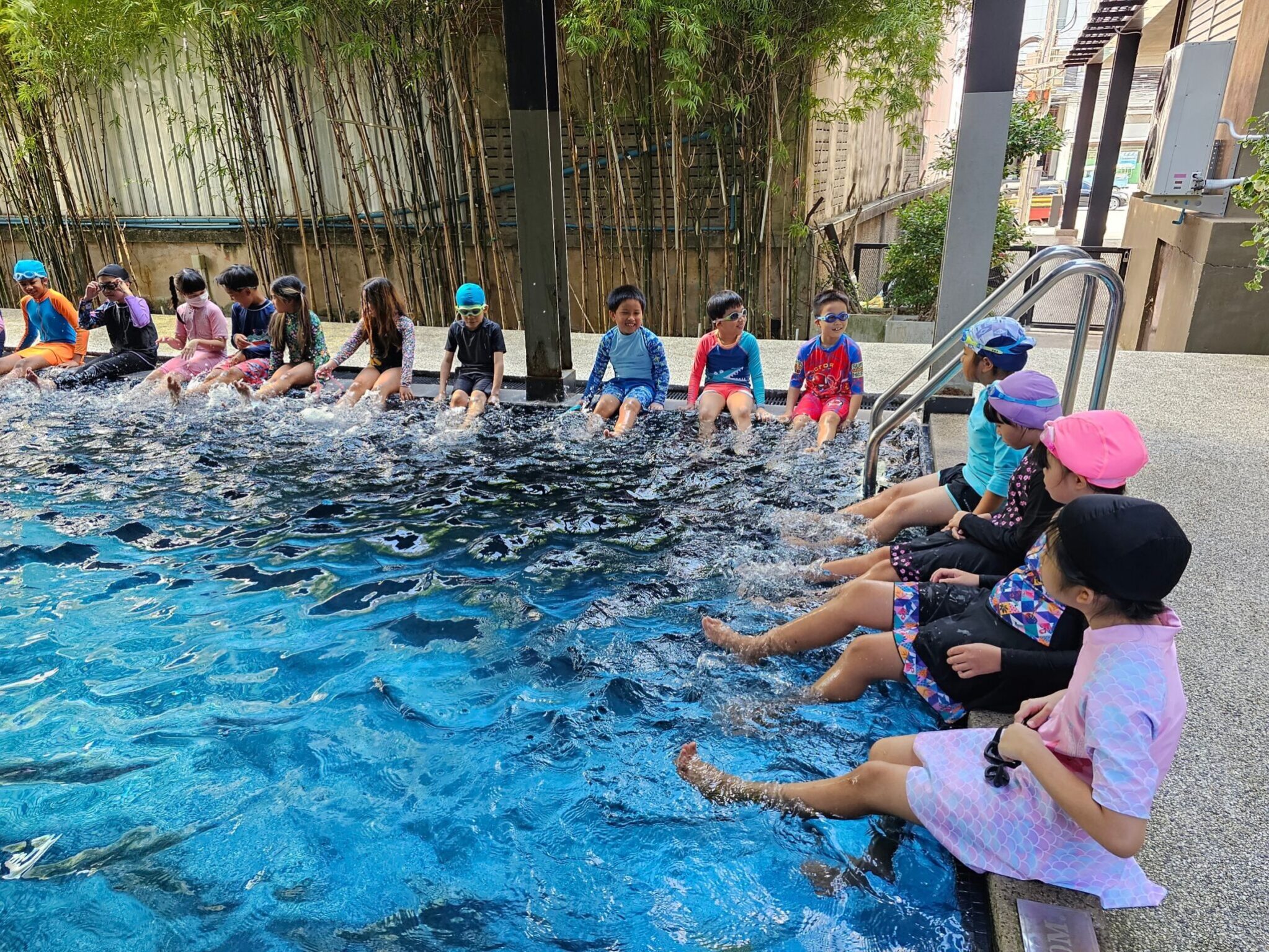
Our basketball and swimming classes offer unique benefits to our elementary students, contributing to their physical, social, and cognitive development.

Basketball enhances cardiovascular fitness, improves coordination, and fosters motor skills as students engage in dribbling, shooting, and passing.

Swimming is a life skill that not only promotes physical fitness but also teaches water safety and drowning prevention. Learning to swim early in life instills confidence and a sense of accomplishment, encouraging a healthy and active lifestyle. 

Technology at Home

directors-blog


Technology at Home

Have you and your family embraced the world of technology? Are you a little bit unsure of how to deal with our modern digital world? How much should you as a parent involve yourself with teaching your child to deal with technology? Or, is this perhaps better to be left in the hands of the teachers at school?

American Prep International is a modern e-learning school and it has adopted the “blended education” model. As such, your child will be expected to utilize a variety of digital devices and techniques in order to be successful at school. Therefore, in the spirit of “collaboration”, it would be wise for each parent to familiarize himself with the digital and technical world in which his child lives and studies. It would also be wise to be pro-active and actually teach and guide your child how to deal responsibly with modern day digital devices and programs.

It is with this in mind that our school shares with you the following infographic. We trust that it will give you some insight and inspiration to get involved in your child’s digital world.

infographic-raising_a_genius_in_the_mobile_era


How to Cooperate with the school

directors-blog


15 Ways to improve cooperation

with your child’s school

Why is cooperation between parents and teachers so important?

Parents participating in APIS Fun Day

Parents participating in APIS Fun Day

All truly great achievements in this world are the result of cooperation between people.

This is especially true in the field of education where so many different individuals are involved in trying to reach one main goal. 

Collaboration is an “anchor” value at American Prep International.

Collaboration is one of the 5 cross-curricular anchor values that the school has identified as making up  the distinctive niche curriculum of the school.

At American Prep we consciously try to find and create opportunities for our students to learn this valuable life skill and to make it part of their character. One of the interesting ways in which this is done this year is by the choice of an innovative motto: “Lets move the elephant”.  The background reason for this somewhat strange motto can be found in another blog post.

Collaboration also involves parents

One aspect of collaboration (cooperation) that we often overlook is the fact that successful education does not only imply collaboration between teachers amongst themselves and between teachers and students. It also implies that there be collaboration between the parent/s and the school.

Teachers often ask parents to cooperate with the school, but sometimes parents don’t really know how they could best do so.
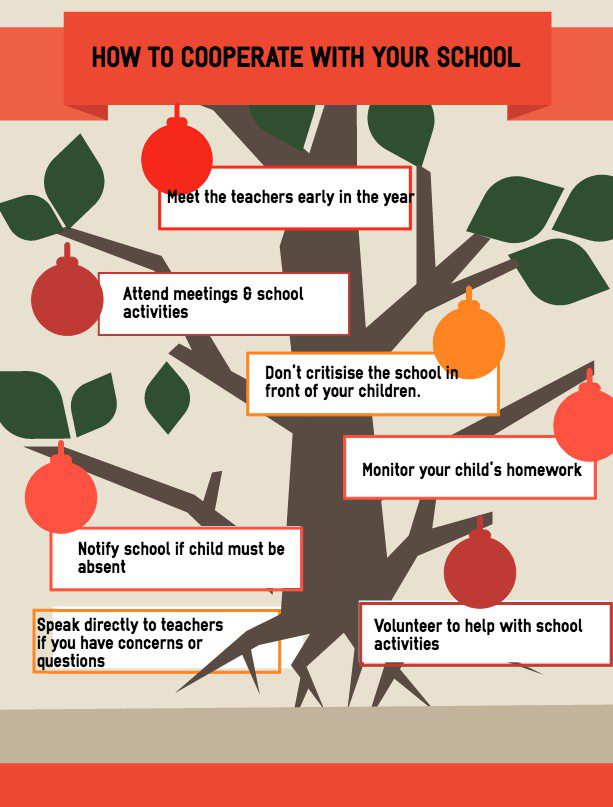
The list that follows should help parents (and the school) to know what is ‘best practice’ for cooperation between the home and the school.

Ways to Communicate and Cooperate with Your School

  •  Get acquainted with the school principal and your child’s teachers early in the school year.

    American Prep International School Fun and Sports Week

    Parents participate in Fun Day Activities

  •  Regularly participate in school activities.
  • Show your interest in and support of the school by attending PTA meetings, parent-teacher conferences, school plays, fun days, etc.
  •  Volunteer to help with field trips, class parties, fund-raising events and other special activities at school.
  •  Call teachers if you have questions about assignments, grades or school policies. It’s better to ask questions than to be “in the dark.”
  • Make use of the school’s invitation to view your child’s grades on the school grades admin system (OpenSis for American Prep School).
  •  Be sure to notify school when your child is absent and make arrangements to pick up homework during long absences.
  •  Notify the school promptly of address, phone or other changes.
  • Always be sure the school has information on how educators can reach you during the school day.
  •  Notify the school in advance if you cannot attend regular meetings or parent teacher conferences. If necessary, make special appointments to meet with teachers.
  •  Avoid criticizing school officials in front of your child. Handle complaints directly with the appropriate school personnel.
  • Make certain that you know what homework your child is expected to do and help him/or her to actually do homework. But do not do the homework for your child.
  • Remember to sign your child’s homework diary on a daily basis if this is part of the school expectations.
  • Remember to fill in any forms and return them to the school when requested to do so.

    American Prep International School Fun Day activities

    Parents playing with their children at APIS


Infogram summarizing the most important ways parents can cooperate with the school

Infogram summarizing the way parents can cooperate with school

If you are willing to follow the above guidelines your child will reap the benefits of a successful school experience and you will – by your example – help your child to realize the importance of cooperation to achieve lasting results!

American Prep International school does not only ask parents to cooperate and communicate with the school. No, the school actually puts various processes in place that help parents and school to have an improved communication experience. This page gives more details about these processes,


End of Page

End of Page

Your School Website as an e-Learning Tool

E-Learning with the help of the school website

In this blog I move from the general to the specific and focus on one rather innovative way in which a grade 9 English Language Arts teacher tries to integrate e-learning into his English teaching curriculum.

Mr. XX is a teacher at American Prep International. All of his students come from Thai speaking homes. Mr. XX  has been thinking for some time how he could make English writing assignments come alive for his students. He wanted to give his students the feeling that they are communicating in ‘real world’ situations and not merely churning out a few sentences or paragraphs on what they did during the summer holidays.

It is then that the idea came to create a School Facebook Group and to let his students post on it. Posts could include their opinions on certain current political debates, or reviews of their favourite  games, cars or even skin care products.

These assignments were enthusiastically accepted by his students and even the least studious student did not need much prompting to start posting. Of course, some class time were spent teaching the technicalities of accessing the Facebook Group and how to actually do the posting. This project is now about three weeks old and is still on-going.

When asked to assess the educational value of this project up to this point in time Mr. XX mentions the willingness and relative enthusiasm of the students to participate in these “writing” exercises. One negative observation, however, is that some students quickly latched onto the idea of finding an article or post from another site and to just post it as is. The end result is thus that they still do not actually do any significant writing – they only regurgitate writing that has been produced by someone else. In this sense teacher XX feels that he has not yet made any real progress in getting his students to “write”.

E-Learning with the School Website

Enter the school website, and more specifically the website blog or the “Directors Blog” as it is known in this particular school. When teacher XX first introduced the school website to his class he discovered that most of the students had never heard of a “blog” and most did not even know that the school had a website! It took a few class periods to introduce these concepts and to discuss what blogging is about. The teacher also explained carefully that modern blogging makes it possible for someone who reads the blog to “comment” on what is written.

Then came the assignment: “Scan through the blogs on the school website, choose one and read it carefully and then write a comment in your own words that relate to the content of the blog”. The reasoning behind this assignment was that it would now serve as a comprehension exercise (anchored in the “real world” of the school) and that it would “force” the student to write down his/her own ideas.

What is the educative assessment, or outcome of this assignment? Well the final word has not yet been spoken on this. In a future blog we will focus in greater detail on the outcomes of both of these approaches.

E-Learning as preparation for modern living

The main point of this particular blogpost is that e-learning must not be too narrowly defined. The innovative teacher should survey which digital media he has access to and then find ways to incorporate them in his teaching practice. In this way he not only prepares his students to cope with the electronic media that they will encounter in the modern world, but he (the teacher) will also practise e-learning and e-teaching in its broader, and possibly, its more relevant and applicable scope.


E-Learning at American Prep International

E-Learning at American Prep

American Prep International School has positioned itself as the trend-setting e–learning school in Thailand. This is a major claim for a school that is barely one year old! The purpose of this blog is to elaborate somewhat on what the school means when it makes this claim.

E-Learning is not “distance”- education

  • The first point of clarification is that “e-learning” at APIS should not be understood as “distance” or “correspondence”-education. In other words, the students at American Prep do not live away from the school while pursuing their their studies by means of online- or e-learning. 

E-Learning tools at American Prep

  • Teachers in the Middle School make use of e-learning tools such as Edmodo or Moodle to support their normal face-to-face classroom teaching. Certain aspects of the curriculum are  taught using either of the above platforms and students can work independently at their own pace and place. Classroom instruction is not replaced, but is supplemented with online learning outside the confines of the school building.


Laptops and E-books at American Prep

  • E-Learning at APIS further means that all middle school students have their own laptop computers and all their text-books are “e-books” rather than printed books


Other digital tools

  • E-Learning at APIS also implies that teachers use a wide variety of internet tools to compliment traditional teaching. This includes: integration of YouTube, Thinglink, Digital Story Telling as well as frequent internet research, into daily teaching activities.


Skillful blending of many digital tools

From the above it is clear that e-learning at American Prep International is not a single concept or methodology but rather the skillful blending of modern e-learning tools and digital/social media to enhance traditional teaching and thus to provide a quality education that prepares and equips young people with skills and attitudes that will help them live meaningfully and responsibly in the world of the 21st century and beyond. A practical example of this type of integration is described in the blogpost: Your School Website as an e-Learning Tool.